I recently read a helpful book about copyright law, Reclaiming Fair Use (and you can read and see my review of the book here.)
One of the central ideas in the book is that copyright law is simple enough to use and understand, something that I think the book did its darndest to explain but still fell somewhat short. It's not them -- fair use is a little bit squiggly to really grasp.
So I made an unscientific but still illuminating poll to find out if I was not alone in thinking copyright law is tricky. I only got a couple dozen responses, but their answers articulate some of the most common reasons why fair use is hard to grasp. To clarify the law, I strongly recommend, again, Reclaiming Fair Use by Patricia Aufderheide and Peter Jaszi.
Thanks to all those who helped in the survey.
Wednesday, November 6, 2013

Review of Reclaiming Fair Use
I finished an excellent book about the history and implementation of fair use, and wrote a video review:
I also wrote a review on Goodreads. The main difference between the two was I tried to create a personal ethos for the video, bringing in why I am personally invested in the issue, whereas I focused the written review on more specifics of the book.
Musical Book Review
When I was getting ready to do this video book review, I wanted to do something with a little bit more excitement than just sitting there and talking about the book. So, I decided to write a song. Please forgive the ultimate cheesiness, but we can all use a few cheesy songs in our life, right?
I wanted to write a song that took the themes from the book that I am planning on using for my research as I go through out the semester. Here are the lyrics:
Robert Gu was an old, forgetful man.
Couldn't do that much, but now he can
Thanks to futuristic technology
and miracles of medicine he's lookin' like a teen.
He's a whole new person and he must explore this brave new world.
But even though it saved his life, he doesn't like it.
He just wants to go back in time and be a poet.
But he's gotta learn to use his wearable
and he's learning that it might not be so terrible.
He's building up a whole new part of Robert Gu.
It's something new.
Conspiracies are everywhere you look,
but no one cares about that part of the book.
The plot and characters don't deserve your care,
but the themes will make you question all that you can bear.
We've just gotta dive right in and explore this brave new world.
Even though it saved his life, he doesn't like it.
He just wants to go back in time and be a poet.
But he's gotta learn to live with technology,
and that doesn't mean he's gotta write his eulogy.
He's building up a whole new part of Robert Gu.
It's something new.
And we've all gotta be a part of something new.
Here is my Goodreads review for you to reference if you have any questions about the song. It is basically the same but it just goes into a little bit more detail, and it's not as cheesy.
I wanted to write a song that took the themes from the book that I am planning on using for my research as I go through out the semester. Here are the lyrics:
Robert Gu was an old, forgetful man.
Couldn't do that much, but now he can
Thanks to futuristic technology
and miracles of medicine he's lookin' like a teen.
He's a whole new person and he must explore this brave new world.
But even though it saved his life, he doesn't like it.
He just wants to go back in time and be a poet.
But he's gotta learn to use his wearable
and he's learning that it might not be so terrible.
He's building up a whole new part of Robert Gu.
It's something new.
Conspiracies are everywhere you look,
but no one cares about that part of the book.
The plot and characters don't deserve your care,
but the themes will make you question all that you can bear.
We've just gotta dive right in and explore this brave new world.
Even though it saved his life, he doesn't like it.
He just wants to go back in time and be a poet.
But he's gotta learn to live with technology,
and that doesn't mean he's gotta write his eulogy.
He's building up a whole new part of Robert Gu.
It's something new.
And we've all gotta be a part of something new.
Here is my Goodreads review for you to reference if you have any questions about the song. It is basically the same but it just goes into a little bit more detail, and it's not as cheesy.
Monday, November 4, 2013
"We the Media" Goodreads Review

I finished up Dan Gillmor's "We the Media" and I was really interested in some of the things that he had to say and the way that he constructed the current state of journalism.
I gave this book four stars out of five. Here is what I wrote about it on Goodreads.
I don't think that Dan Gillmor was the first one to propose the idea that modern technology is evolving the ways that we produce and consume news, but he traced it and explained it in a way that was highly effective and very informative. As a student who is about to graduate and who is thinking of a career in media, it was fascinating to hear his take on the current status of journalism. This set the stage for how media was changing now, and what that means for the general population.
Gillmor feels very hopeful about the ways that journalism is changing, and and I feel the same way. I really liked in this introduction when he said, "The rise of citizen journalists will help us listen. The ability of anyone to make the news will give new voice to people who've felt voiceless--and whose words we need to hear. They are showing all of us--citizen, journalist, newsmaker--new ways of talking, of learning." He clearly shows his reader that these changes are not only important to the ones making the news, but to everyday citizens too who may not have even taken note of the great changes, improvements, and of course some set backs that have occurred in the past years. The biggest problem that I had with this book is that in many ways it is already outdated. Technology changes so fast that it is difficult for a book to be current on everything for more than a couple years. I would be very interested to see Gillmor's opinions on how social medias, especially Twitter, are effecting the current state of journalism.
I've been following Dan Gillmor on Twitter to see if he has brought up any ideas from his book, but updated for everything that has happened with technology since its publication, but haven't seen him circiling back to this idea in recent posts. I am sure that he has through and am really interested in doing some searching around to see what he and other people in the technology and journalism fields are saying about this now.
"Rainbow's End" Book Review
While I was writing this review, on Goodreads, I actually found it hard to keep things so concise. I kept wanting to lapse into the tradition book review formula, as Dr. Burton talked about in this blog post. But I found that by the end, I had expressed the most important points, and I felt like I could contribute something to that kind of community. So, while this is probably the shortest blog post ever, it stands as a sort of testament to how the new kind of book review is emerging!
Curation: the ups and downs of Goodreads
 |
| Image courtesy Goodreads. |
The main problem I have found is that for the subject of nonfiction, it makes some more sense to curate writers rather than books -- and much of the best work has appeared in other forms of publication. Goodreads does allow permalinks to author pages, and that is helpful -- more interesting than a Wikipedia entry, and with a social component built in.
To go about finding pieces for my collection, I searched terms like "nonfiction" and "essays" into Goodreads and found other people's lists. That was a little daunting, but it gave me a lot of material.
The most powerful tool so far for finding works has been my social network. On Facebook, I got great recommendations from friends about their favorite writers when I asked for recommendations in a status. I even got some private messages too. I will now link their suggestions to my collection on my Goodreads shelf.
I will share the results of my curation efforts soon. Ultimately, I want to create a resource for nonfiction writers that will not only have curated suggested reading but actual interviews with writers about their craft.
Onward!
Sunday, November 3, 2013
What use is fair use? (Do you know?)
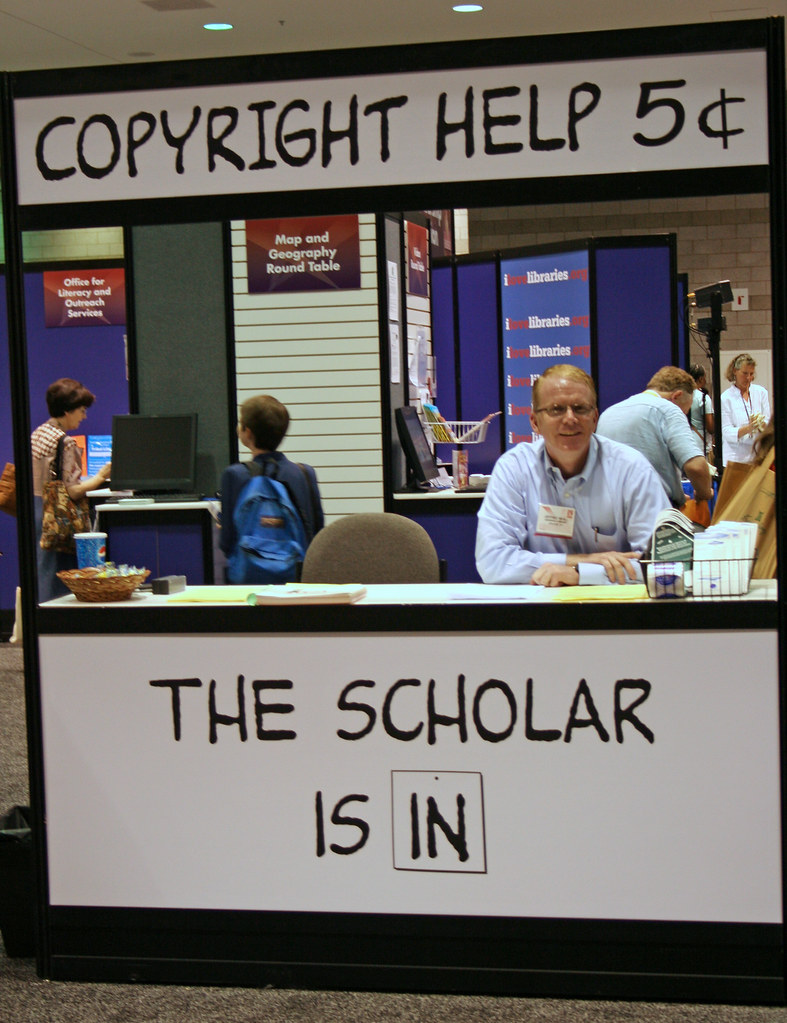 |
| Are you a copyright scholar? Do you need to be in order to understand and use Fair Use? Creative Commons image by Jeffrey Beall. |
So I created this very short survey. Only 5 questions long, it should not take more than a minute or two to complete, and I would really love it if you would participate! Here it is:
A Very Short Survey on Fair Use
Thanks! Looking forward to sharing my findings with you as I continue to consider copyright laws.
Subscribe to:
Posts (Atom)